CONTACT US: 020 7870 1746
London's #1 End of Tenancy Specialists
EMAIL US: customer.support@scrubscleaning.co.uk

- Home
- Our Services
- Domestic Cleaning
- Deep Cleaning
- Carpet Cleaning (Commercial)
- Carpet Cleaning (Residential)
- Commercial Cleaning
- End of Tenancy Cleaning
- Barnet
- Battersea
- Brixton
- Camden
- Canary Wharf
- Chelsea
- Clapham
- Ealing
- Edmonton
- Enfield
- Fulham
- Greenwich
- Hackney
- Hammersmith
- Hampstead
- Harrow
- Ilford
- Islington
- Kensington
- Kilburn
- Lewisham
- Maida Vale
- Marylebone
- Mayfair
- Paddington
- Pimlico
- Putney
- Richmond
- Shepherds Bush
- Soho
- Stratford
- Tottenham
- Victoria
- Wembley
- Westminster
- Wandsworth
- After Build Cleaning
- Ultimate Housekeeping
- Contact
- Blog
- Join Us!
End of Tenancy and Deep Cleaning in London: 12 Important Questions Answered
Moving out of a rented property or arranging a thorough deep clean can raise some questions. What level of cleanliness is legally required? Can a landlord deduct cleaning costs from a deposit? Is professional cleaning sufficient to remove years of accumulated dirt? And how should delicate surfaces or heavily soiled carpets be treated?
In London, where rental properties experience frequent changes of tenants and busy households often struggle to maintain every corner of their homes, professional cleaning services can make a significant difference.
At Scrubs Cleaning, we specialise in end-of-tenancy cleaning, deep cleaning, after-build cleaning, and carpet and upholstery steam cleaning throughout London.
Here are 12 frequently asked questions, including some of the more complex issues surrounding professional property cleaning.
1. What is the difference between end-of-tenancy cleaning and deep cleaning?
Although both services involve thorough cleaning, their objectives are different.
End-of-tenancy cleaning focuses on preparing a rental property for its final inspection and returning it to the level of cleanliness recorded at the beginning of the tenancy, allowing for fair wear and tear.
Deep cleaning involves removing accumulated dirt, grease, limescale and grime from areas that are often overlooked during routine cleaning.
End-of-tenancy cleaning usually follows a comprehensive checklist covering kitchens, bathrooms, bedrooms, living areas and fixtures. Deep cleaning can be tailored to particular areas or problems.
Both services require attention to detail, but end-of-tenancy cleaning is particularly important when a tenancy deposit is involved.
2. Can a landlord legally require tenants to pay for professional cleaning?
Under the Tenant Fees Act 2019, landlords and letting agents in England cannot generally require tenants to pay for a professional cleaning service as a condition of their tenancy.
However, tenants are still responsible for returning the property to an appropriate standard of cleanliness.
The key consideration is the property’s condition at the beginning of the tenancy, as recorded in the check-in inventory, compared with its condition at the end.
If a property was professionally cleaned before a tenant moved in, the tenant may need to achieve a comparable standard of cleanliness when leaving, but they are not necessarily required to hire a professional company.
Where cleaning standards are not met, a landlord may seek reasonable cleaning costs from the deposit, supported by appropriate evidence.
3. How are cleaning-related deposit disputes assessed, and what evidence is important?
Cleaning disputes are among the common disagreements between landlords and tenants at the end of a tenancy.
When a dispute arises, the evidence usually matters more than whether a professional cleaning company was hired.
Important documents may include the original check-in inventory, photographs taken at the beginning and end of the tenancy, check-out reports and cleaning invoices.
For example, if an oven was already heavily soiled when the tenancy began, a landlord would generally have difficulty justifying a deduction for returning it in a similar condition.
However, if the oven was spotless at check-in and covered in grease at check-out, a reasonable cleaning deduction may be justified.
Tenants should therefore keep photographs and documentation showing the property’s condition when they leave.
A professional cleaning service can help reduce the risk of disputes by ensuring that frequently inspected areas receive appropriate attention.
4. What cleaning problems are most frequently identified during end-of-tenancy inspections?
Some areas are particularly likely to attract attention during property inspections because they accumulate dirt gradually and are easily overlooked.
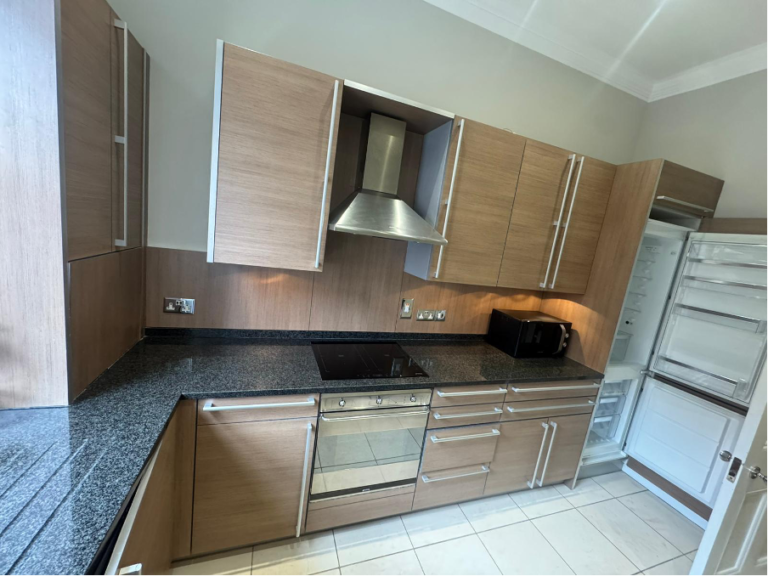
Kitchens are often a major concern. Grease inside ovens, extractor fans and cupboards can be difficult to remove without suitable cleaning products and techniques.
Bathrooms frequently develop limescale around taps, shower screens and toilets, especially in London, where hard water is common.
Other problem areas include window tracks, skirting boards, internal doors, light switches, behind appliances and carpet edges.
These details can make a significant difference to the overall appearance of a property.
At Scrubs Cleaning, we use detailed cleaning checklists to help ensure that commonly overlooked areas receive the attention they need.

5. Can professional cleaning remove years of accumulated grease, limescale and stubborn stains?
Professional deep cleaning can significantly improve heavily soiled surfaces, but the results depend on the type of contamination and the condition of the material.
Kitchen grease often requires specialist degreasers and sufficient contact time to break down accumulated deposits.
Limescale may need appropriate descaling products, particularly on taps, shower screens and tiles.
However, certain marks are not simply dirt. Permanent staining, corrosion, scratches and deterioration of protective finishes cannot always be reversed through cleaning.
Using aggressive chemicals or abrasive equipment can sometimes cause further damage.
A professional cleaner should therefore assess the material before selecting a suitable treatment.
The aim is not simply to remove dirt, but to do so without damaging the surface underneath.
6. How much does professional end-of-tenancy cleaning cost in London, and what affects the price?
Cleaning costs vary according to property size, condition, accessibility and the services required.
Indicative London prices include:
|
Property size |
Approximate price |
|
Studio |
£165–£245 |
|
One-bedroom property |
£185–£265 |
|
Two-bedroom property |
£250–£350 |
|
Three-bedroom property |
£285–£450 |
|
Four or more bedrooms |
£325–£500+ |
These are approximate market ranges, not fixed quotations.
Properties requiring extensive grease removal, significant descaling or specialist treatments may cost more. Big windows can also add extra time and cost.
Additional services, including carpet steam cleaning and upholstery cleaning, may also affect the final price.
When requesting a quotation, it is important to clarify exactly what is included, particularly oven cleaning, internal windows, cupboards and appliances.
7. Can carpet steam cleaning remove pet odours, allergens and deeply embedded dirt?
Professional carpet cleaning can remove a substantial amount of embedded dirt and some contaminants that ordinary vacuuming cannot reach.
Hot-water extraction equipment uses water and suitable cleaning solutions to loosen dirt before extracting it from the carpet fibres. This method can improve the appearance of carpets and help reduce certain allergens and odours.
However, pet urine can penetrate the carpet backing and underlay, making complete odour removal more difficult.
Some stains may also become permanent if they have reacted chemically with the fibres or have been treated incorrectly in the past.
Professional assessment is particularly important for wool carpets, delicate fabrics and materials that may be sensitive to moisture.
Scrubs Cleaning offers carpet and upholstery steam cleaning as an additional service alongside end-of-tenancy and deep cleaning.
8. How should delicate surfaces such as natural stone, marble, wood and specialist finishes be cleaned?
Modern London homes often contain materials that require particular care, including marble, limestone, engineered wood, polished concrete and specialist kitchen worktops.
Using the wrong cleaning products can cause irreversible damage. For example, acidic descalers can etch marble and limestone, while excessive moisture may damage certain timber floors. Abrasive cleaning pads can also scratch delicate finishes or remove protective coatings.
Professional cleaners should identify the material before choosing the cleaning method and follow relevant manufacturer guidance.
This is especially important following renovations, when newly installed surfaces may have specific maintenance requirements.
At Scrubs Cleaning, we understand the importance of selecting appropriate cleaning techniques for different materials and finishes.
9. What are the main cleaning challenges following building or renovation work?
After-build cleaning differs from ordinary deep cleaning because construction work produces particular types of contamination.
Fine plaster and construction dust can settle on walls, floors, cupboards, windows and ventilation grilles. This dust may continue to circulate and settle even after the initial cleaning.
Paint splashes, adhesive residue and grout haze can also require careful treatment.
Cleaning newly installed surfaces presents an additional challenge, as aggressive chemicals or unsuitable tools can damage fresh finishes.
After-build cleaning may therefore involve several stages, beginning with the removal of loose dust and debris, followed by detailed surface cleaning and a final inspection.
Scrubs Cleaning provides after-build cleaning services for homeowners, landlords, developers and contractors across London.
10. How can landlords and property managers minimise vacancy periods through professional cleaning?
For landlords and property managers, cleaning is an important part of preparing a property between tenancies. A poorly cleaned property may delay viewings, inventory inspections or the arrival of new tenants.
Coordinating professional cleaning immediately after a tenant moves out can help make the turnaround process more efficient.
Ideally, cleaning should take place after maintenance and repair work has been completed but before the new tenants arrive.
Landlords may also benefit from combining end-of-tenancy cleaning with carpet steam cleaning or additional deep-cleaning services.
Scrubs Cleaning works with landlords, letting agents and property managers to support efficient property preparation.
11. What should customers expect from a professional cleaning guarantee?
A cleaning guarantee provides reassurance that eligible issues identified after a professional cleaning service can be addressed.
However, guarantees vary between companies and may include specific conditions. For example, a guarantee may require customers to report missed cleaning areas within a particular period and provide photographs.
It may not cover permanent staining, existing damage, general wear and tear or areas that were excluded from the original service.
At Scrubs Cleaning, we offer a seven-day cleaning guarantee, subject to our service terms.
Customers should always clarify what is included in their cleaning package and understand the conditions of any guarantee before booking.
12. Is regular deep cleaning more cost-effective than waiting until a property becomes heavily soiled?
Regular deep cleaning can be a practical way to maintain a property and reduce the accumulation of stubborn dirt.
Grease, limescale and grime generally become more difficult to remove when left untreated for extended periods.
For example, routine descaling may help prevent heavy mineral deposits from developing around bathroom fittings.
Similarly, regular cleaning of kitchen appliances and extractor fans can reduce grease accumulation.
Periodic deep cleaning may also help preserve the appearance and condition of suitable surfaces and furnishings.
For many households, arranging a deep clean every three to six months can complement regular domestic cleaning, although the ideal frequency depends on how the property is used.
Preventative cleaning may reduce the need for more intensive work later, particularly in busy family homes and rental properties.
Why Choose Scrubs Cleaning in London?
At Scrubs Cleaning, we understand that every property presents different cleaning challenges. Professional cleaning is about more than improving appearances. It can help protect property finishes, support smoother tenancy transitions and make homes more pleasant to live in.
If your London property needs an end-of-tenancy clean, a comprehensive deep clean, after-build cleaning or carpet and upholstery steam cleaning, contact Scrubs Cleaning today for a free, no-obligation quotation.
Let our team take care of the hard work while you enjoy a cleaner, fresher property.